Source limited ingredient dog calming treats for puppies, adults, and training
Compare 30 verified options for limited ingredient dog calming treats designed for puppies, adult pets, and training sessions. Buyers can evaluate features like grain-free formulas, specific protein levels, and packaging sizes to find suitable suppliers for their needs.
Key considerations
Products List


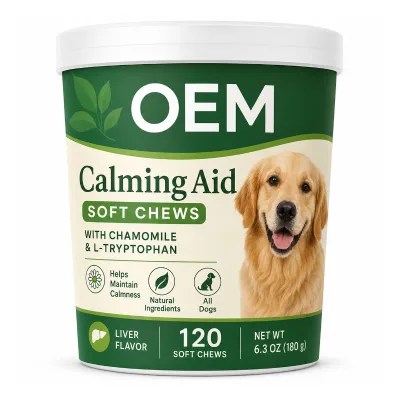




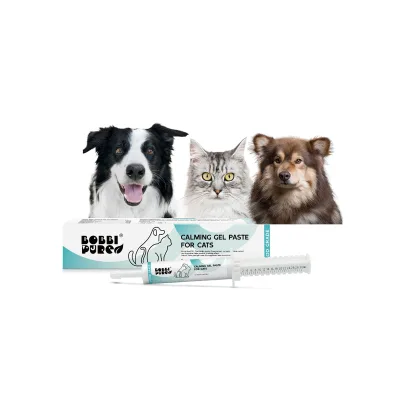
Comprehensive Sourcing Guide
Strategic Sourcing Framework for Limited Ingredient Dog Calming Treats
Sourcing limited ingredient dog calming treats requires a nuanced understanding of formulation constraints, regulatory compliance, and supply chain reliability. The market for these specialized products is driven by pet owners seeking solutions for anxiety, stress, and behavioral issues without exposing their animals to unnecessary additives or allergens. A procurement strategy must balance the functional requirements of calming ingredients with the rigorous standards of pet food safety. Buyers must navigate a landscape where "limited ingredient" is not merely a marketing term but a strict formulation discipline involving single protein sources, minimal carbohydrate complexity, and the exclusion of common irritants. This guide outlines the critical technical, operational, and compliance factors necessary for establishing a robust supply chain for these high-value pet nutrition products.
Technical Specifications and Formulation Constraints
The foundation of any limited ingredient product lies in its nutritional profile and ingredient list transparency. When evaluating potential suppliers, procurement teams must scrutinize the guaranteed analysis provided in product specifications. Key metrics include crude protein, crude fat, crude fiber, and moisture content. For instance, observed market data indicates that high-quality dog treats often maintain crude protein levels between 29% and 36.2%, while crude fat ranges from 5% to 14.3%. Moisture content is particularly critical for shelf stability and texture; dry treats typically exhibit moisture levels under 12%, whereas soft and chewy varieties may range up to 25%.
The "limited ingredient" claim necessitates a specific verification process. Buyers should demand a full ingredient declaration that lists components in descending order by weight. For calming formulations, the presence of functional ingredients such as L-theanine, chamomile, or specific hemp extracts must be verified against the total ingredient count. A product labeled as "All Natural" or "Grain-Free" must align with its ingredient list; for example, a product with a "Grain-Free" feature should not contain wheat, corn, or soy. Furthermore, the physical form of the treat—whether dry, soft, or chewy—impacts the delivery of active calming compounds. Dry treats, often with moisture content capped at 12%, may require different encapsulation techniques for sensitive ingredients compared to soft treats with higher moisture content.
| Attribute | Dry Treat Profile | Soft/Chewy Treat Profile |
|---|---|---|
| Moisture (Max) | 12% | 25% |
| Crude Protein (Min) | 34% | 29% |
| Crude Fat (Min) | 10% | 5% |
| Texture | Brittle, Hard | Soft, Pliable |
| Typical Application | Training, Maintenance | Behavioral Support, Reward |
Compliance and Certification Verification
Regulatory compliance is the most significant barrier to entry for importing pet treats into major markets such as the United States, the European Union, and China. Buyers must verify that suppliers adhere to the specific standards of the destination market. While specific certification names vary by region, the underlying requirement is a validated quality management system. For example, products originating from regions like Zhejiang, Fujian, or Shandong in China must demonstrate compliance with local production standards and international export requirements.
When sourcing calming treats, the legal status of ingredients like hemp is paramount. In many jurisdictions, the concentration of tetrahydrocannabinol (THC) in hemp-derived products must be strictly controlled. Buyers should request third-party laboratory test results confirming THC levels are within legal limits (typically below 0.3% in the US). Additionally, suppliers should provide documentation proving that their facilities are free from cross-contamination with common allergens. This is essential for products marketed as "Gluten-Free" or "Single Protein." The absence of specific certifications does not automatically disqualify a supplier, but the lack of verifiable testing data for heavy metals, pesticides, and microbial contaminants is a critical red flag.
Cost Drivers and Pricing Dynamics
The cost structure of limited ingredient dog treats is influenced by several distinct factors. The primary driver is the quality and source of the protein. Single-source proteins, such as turkey, beef, or chicken, often command a premium over multi-meat blends. In the observed market, pricing can vary significantly, ranging from $0.10 to $31,000 depending on the order volume, packaging configuration, and product complexity. This wide range reflects the difference between bulk raw material procurement and finished, branded, small-batch production.
Packaging specifications also play a substantial role in cost. Standard packaging sizes observed include 16 ounces (454g), 6 pounds (2.72kg), and smaller retail units like 100g or 4.2 ounces (120g). The dimensions of the packaging, such as 22.70x17.39x7.89 cm or 27.73x19.60x18.33 cm, affect shipping logistics and volumetric weight calculations. Customization services, which are available in the market, add to the unit cost but can be essential for brand differentiation. Buyers must evaluate whether the added cost of custom molds, labels, or proprietary formulations justifies the potential market advantage.
Typical Applications and Target Demographics
Understanding the application of the product is vital for matching supply with demand. Limited ingredient calming treats are primarily targeted at adult pets and puppies, though the specific formulation may vary. Some products are explicitly designed for training purposes, utilizing small, bite-sized formats like "Peanut Butter Mini" biscuits, while others are formulated for general behavioral support. The "Chicken Wrapped Fruit" variety, for instance, suggests a focus on palatability and natural ingredients, appealing to owners who prioritize holistic nutrition.
The application also dictates the required shelf life. Most observed products carry a shelf life of 18 months, which is standard for dry and semi-moist treats. However, products with higher moisture content or fresh ingredients may require shorter shelf lives and more stringent cold-chain logistics. Buyers should align their inventory planning with these shelf-life constraints to minimize waste. Furthermore, the target demographic influences the marketing narrative; products for puppies may require lower fat content and specific nutrient profiles to support growth, while adult pet treats focus on maintenance and behavioral management.
Supplier Evaluation and Production Capabilities
Evaluating a supplier requires a deep dive into their production capabilities and customization options. The market data indicates that suppliers offer customization services, allowing buyers to tailor product formulations, packaging, and branding. However, the ability to customize does not guarantee quality. Buyers must assess the supplier's facility for adherence to Good Manufacturing Practices (GMP). This includes verifying the cleanliness of the production line, the segregation of allergens, and the calibration of mixing and baking equipment.
Lead times are another critical factor in supplier evaluation. Observed production times can range from 35 days for standard orders to longer periods for highly customized runs. The Minimum Order Quantity (MOQ) is equally important; observed MOQs range from 1 unit to 12,000 units, with specific products like training treats requiring a 1,000-unit minimum. Buyers must ensure their order volume aligns with the supplier's MOQ to avoid excessive per-unit costs or production delays. Additionally, the origin of the product, whether from Shandong, Zhejiang, or Fujian, can impact logistics costs and lead times. A supplier with multiple production sites may offer greater flexibility in scaling production during peak demand periods.
Quality Control and Testing Protocols
Robust quality control (QC) protocols are non-negotiable for pet treat manufacturers. Buyers should require a comprehensive QC plan that covers raw material intake, in-process monitoring, and final product release. Key testing parameters include microbial counts (Salmonella, E. coli), mycotoxins, and heavy metals. For calming treats, the consistency of active ingredients is crucial; batch-to-batch variation in the concentration of calming agents can lead to inconsistent results for the end consumer.
The observed product specifications provide a baseline for QC. For example, a product with a "Crude Protein (Min)" of 36.2% must consistently meet or exceed this threshold. Similarly, moisture content must not exceed the maximum limits (e.g., 25% for soft treats) to prevent spoilage. Buyers should insist on Certificates of Analysis (CoA) for every shipment. These documents should be issued by an accredited third-party laboratory or an in-house lab with validated methods. The CoA must verify that the product meets the stated nutritional profile and is free from contaminants. Regular audits of the supplier's QC records can help identify trends and prevent recurring quality issues.
Long-Term Procurement Considerations
Establishing a long-term partnership with a supplier involves more than just securing a one-time order. Buyers must consider the scalability of the supply chain, the stability of ingredient sourcing, and the potential for product evolution. The pet food industry is dynamic, with shifting consumer preferences and regulatory landscapes. A supplier that can adapt to new ingredients or packaging trends will be more valuable in the long run.
Sustainability is also becoming a key consideration. Buyers should inquire about the sourcing of raw materials, particularly for proteins and plant-based ingredients. Ethical sourcing practices can enhance brand reputation and align with the values of modern pet owners. Additionally, the flexibility of the supplier to handle fluctuating demand is crucial. A supplier with a robust inventory management system and the ability to ramp up production during peak seasons can prevent stockouts and lost sales. Finally, maintaining open communication channels with the supplier ensures that any changes in regulations or product specifications are communicated promptly, allowing for proactive adjustments to the procurement strategy.
FAQs
What is the minimum crude protein content for these treats?
The minimum crude protein content ranges from 29% to 36.2% depending on the specific product formulation. Dry treats typically maintain higher levels around 34% or 36.2%, while soft varieties may start at 29% to ensure texture and palatability for adult pets and puppies.
Can I find grain-free options with low moisture content?
Yes, grain-free options are available with moisture content capped at 12% for dry varieties. These dry treats ensure shelf stability and are suitable for training or maintenance, whereas soft and chewy types may have higher moisture levels up to 25%.
Which suppliers offer customization for packaging and branding?
Suppliers in Zhejiang, Fujian, and Shandong offer customization services for packaging and branding. Buyers can tailor product specifications and labels, though lead times may extend to 35 days for standard orders or longer for highly customized runs.
How long is the shelf life for these limited ingredient treats?
Most observed products carry a shelf life of 18 months, which is standard for dry and semi-moist treats. This duration applies to items like chicken wrapped fruit or beef pearls, ensuring safety and quality during storage and distribution.
What is the typical minimum order quantity for training treats?
The minimum order quantity varies significantly, ranging from 1 unit to 12,000 units depending on the product. Specific items like peanut butter mini biscuits often require a 1,000-unit minimum, while other varieties may have lower thresholds for bulk procurement.
Can I source single-protein treats from specific Chinese regions?
Yes, single-protein treats are sourced from regions like Shandong, Zhejiang, and Fujian in China. These locations produce various formats including turkey and beef flavors, with specific packaging standards like 100g bags or 16-ounce containers available for export.